


Because it helps produce so many different parts, injection molding is still a vital process in many industries. However, figuring out the viability of the method requires a grasp of the cost behavior of injection molding. This subject focuses on the variables that affect the cost of injection molding, namely the effect of production volume and cost-reduction tactics. This blog helps readers answer the frequently asked question, “How much does a plastic injection mold cost?,” by highlighting the cost drivers that have a significant impact on the project. So carry on reading.
Normally the price will be little difference from each plastic injection molding company, but general cost will be pretty much the same.
There is no way to establish a standard price for injection molding because it is dependent on so many variables. Custom plastic injection molding is a key step in the prototyping process. However, it is quite expensive for small runs, costing between tens and hundreds of thousands of dollars. All of these costs are caused by various factors.
Equipment, which is also a cost in production, is one of the primary factors driving costs. In contrast, molding equipment has a fixed cost. This means that machining molds and mold bases is often more expensive due to the mold’s design, material, and manufacturing process.
Electric discharge machining (EDM) is another method for adding complicated and fine features to injection molding molds. EDM warms the metal component before fusing it into the required mold shape with high-energy electric shocks. Even though EDM is extremely precise, it can only be used on metal molds and may not perform well on other types of molds.
Furthermore, CNC machining is commonly utilized to create metal models, particularly those made of steel, aluminum, and related materials such as engineered-grade plastics. Because the cast is created by CNC cutting a metal block, it works best for shapes with tight tolerances.
In recent years, 3D printing has been viewed as a quick and inexpensive method of creating models for plastic injection molding. Molds are created by adding layers to a digital model using 3D printing, also known as additive manufacturing. Unlike other basic machining procedures, this one is less dependent on the operator’s skills. This means that large labor costs are unlikely to occur. There are a few variables to consider, such as the size of the construction platform and the fact that the printed models will shrink.
It is critical to compare the two procedures in order to achieve the desired mold quality and pricing. Each method has its own advantages and disadvantages.
Machines Used For Injection Mold Creation
A big part of figuring out how much something costs is looking at the tools that are used for injection molding. There are different types of injection molding tools based on their size, level of automation, and price. Let us look at how much different types of tools cost.
Injection molding tools that use electricity
An electro-servo motor is used in these tools because it is cheaper, more accurate, and uses less energy. While they are beautiful, they need a lot of money and care compared to other types of bananas.
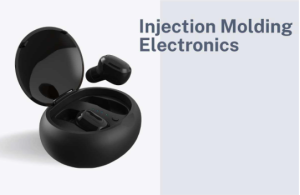
Hybrid tools for injection molding:
Hybrid machines have parts that are both electric and hydraulic, like servo motors and hydraulic pumps. They are a little more expensive and need more care in the beginning, but they are very accurate, stable, and good at saving energy.
Hydraulic pumps are an important part of hydraulic injection molding tools because they are very reliable, have consistent ejection and injection rates, and don’t cost much to buy at first. But they often use more power and might not work as well as electrical gadgets.
Because the equipment used in injection molding costs a lot and needs to be maintained regularly, many businesses hire service providers to do the work for them. Companies that want to cut costs can use this approach because they don’t have to buy or maintain machines.
Prices for resins like PC, ABS, PU, PP, and PE are closely linked to their use and usually fall between $1 and $5 per kilogram. The price of the material, on the other hand, depends on how the product is designed and how it is used during the shaping process.
Factors Contribute To Expense of Injection Mold Cost
Prices for injection-molded parts vary, including:
Part Complexity: To create components with complex geometries, molds made using 3D printing, CNC, or EDM manufacturing are required. These intricate models may be more expensive to produce because they require more material and take longer to complete.
The cost of injection molding material is determined by the size of the object to be manufactured. It takes longer to create larger and more sophisticated designs than smaller and simpler ones.
Undercuts can cause complications in both mold making and part filling. To keep costs down, it is recommended that undercuts be avoided or that removable cutoffs be integrated into the mold as it is being manufactured.
Finishing and appearance: Parts that are not required for the product may be added to the injection molding process, increasing the cost. These molds are also expensive and difficult to use since they require high-quality polishing, bead blasting, or texturing.
Injection Molding Expenses also Include Labor and Extra Services:
Let’s take a look at how labor expenses affect the overall expenditures of an injection molding project.
Installation costs: Machine settings are related with all stages of the injection molding process, which is especially important during technically hard mold building.
Repair Costs: Injection molding equipment, like all other machinery, requires maintenance and replacement, which is an expense associated with running a business.
Costs of the Operator: For best project performance, operators contribute to labor costs, which are one of the expense categories.
Cost depends on production volumes.
Injection molding costs vary depending on the quantity of units produced. Manufacturing volumes are categorized into several classes, each with its own cost.
Production of low volume injection moulding:
Components that can be manufactured in batches of one hundred to two thousand are possible. Molds for low-volume manufacturing are made from RT or 3DP polymer resin, which is less expensive and faster to produce. For example, the cost of producing 100 to 1,000 pieces could be $100 to $1,000 for the mold and $0.5 for each chunk of raw material.
To achieve the greatest outcomes, it is critical to understand injection molding costs, equipment kinds, and how production volume influences expenses.
Productivity of Mid Volume Injection Molding:
5,000 to 10,000 parts are usually part of mid-volume production. Molds made of pre-hardened steel or aluminum are the best choice for producers because they are cheap and last a long time. When this happens, companies might decide to hire more workers to help them with mold and molding at this level of output.
Take, for example, a 5,000–10,000 part production run with the following rough cost breakdown:
$2,500–$5,000 is the mold cost.
Part Cost of Raw Materials: $0.5
Labor Cost per Part: An approximation is $2
Computed Total Cost per Part: £3
Tips to Cut Injection Molding Expenses:
As a result, lowering the cost of injection casting is critical for increasing output and making the best use of available resources. Some popular ways to save money are discussed below.
1. Design for Manufacturing (DFM) Analysis: Using scientific and technological elements to reduce injection molding costs and incorporating DfM analysis into the design phase to create parts that work and are reasonably priced within the budget.
2. Simplify Design Features: To cut injection molding cost in half, simplify designs and eliminate unnecessary parts. Pay more attention to how things work rather than their appearance.
Third, consider universal molds. Standard molds allow for the production of high-quality parts at lower costs. As a result, they perform better when no special molds are required. CAD models aid in mold creation prior to production and make the process more cost-effective.
4. Select Cheap Materials: By selecting the right material, such as ABS or polypropylene, you can significantly reduce the cost of injection molding while maintaining quality. The materials must be high-quality, but the solutions should not be prohibitively expensive.
5. Consider insert molding: If you want to save money in the long run, you should research insert molding and overmolding. For example, insert molding saves money by eliminating the need for plastic threading on metal parts.
6. Reduce Mold Holes: To save money on plastic mold costs, limit the number of holes in molds. Moldflow analysis can help you determine where holes can be filled without compromising the part’s performance or appearance.
Overall, if these strategies are successfully implemented, the production line can be made more efficient while also significantly lowering the costs of injection molding procedures.
RFQ
Q1:How much does injection molding cost?
It depends on the complexity and volume of production. Despite its high price, it is very cost-effective in situations requiring large quantities of parts with exact dimensional accuracy.
Q2: how much is a plastic injection mold likely to cost?
Injection mold costs can vary from $300 to $3,000, depending on factors such as material type, mold complexity, production volume, and part design.
Q3: Can non-plastic materials be effectively injected?
Since injection molding is versatile and can be used with metals and rubbers, it finds use in many different industries.
