

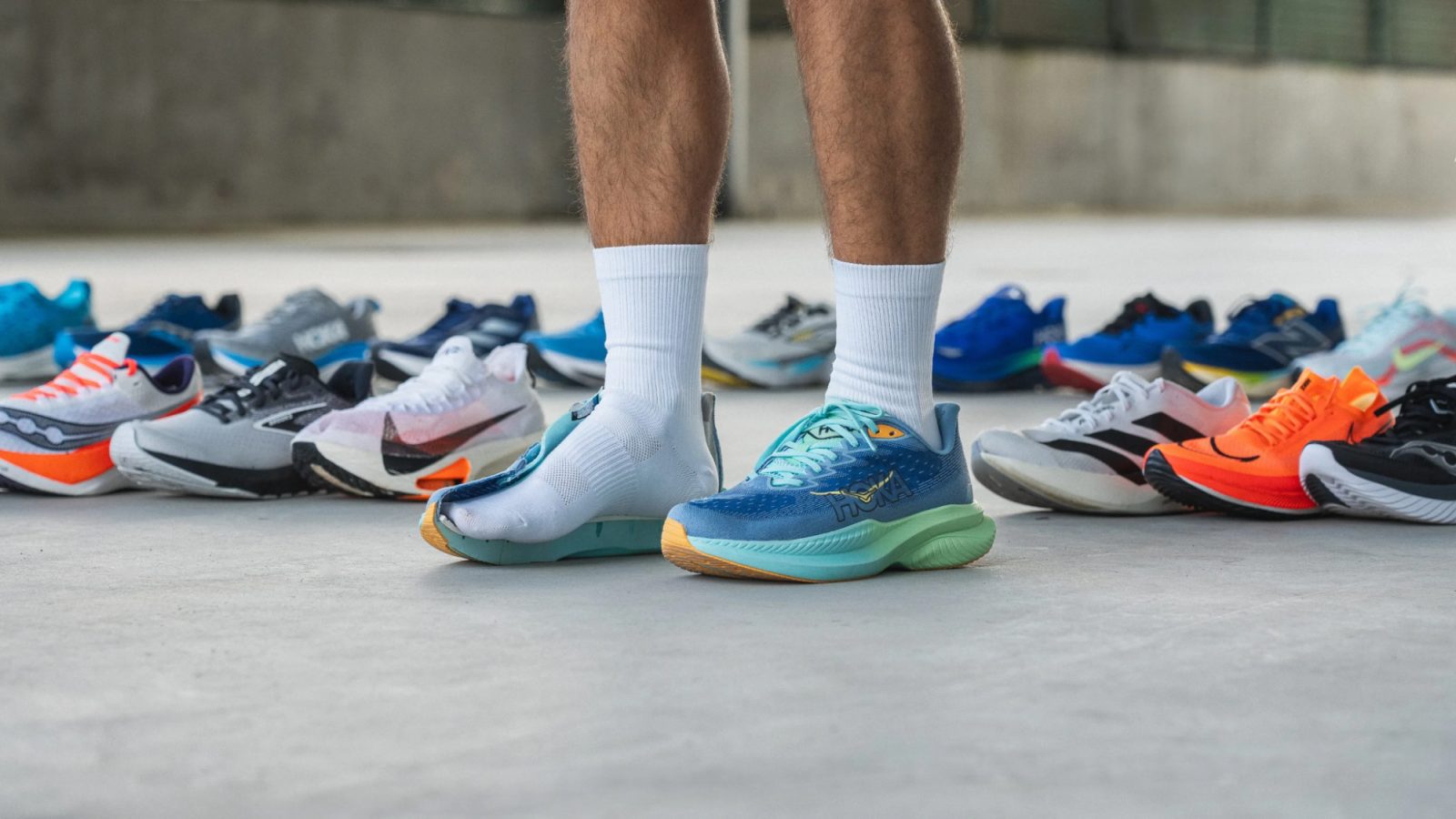
Lightweight vs Cushioned Running Shoes: What Should Men Choose?
Two runners, two very different shoes. One likes a feather-light pair that lets him pick up speed. The other wants a soft, cushioned ride that soaks up the miles. Both are right, for their own running.
So which should you pick? It comes down to how you run, how far, and what your body likes underfoot. This guide lays out what each type does best, then helps you choose.
What Are Lightweight Running Shoes Built For?
Lightweight running shoes strip away weight so your feet feel quick and free. Less shoe means less effort per stride, which suits faster running and short bursts of pace. The trade-off is a little less cushioning and support, so they are built more for speed than for soaking up long distances.
Speed and Tempo Runs
When you want to run fast, a light shoe helps. It feels snappy and responsive, so short, quick sessions come easier. Many men keep a light pair just for tempo days and speed work.
Shorter Distances
For 5K and 10K efforts, a lighter build keeps you nimble. There is less shoe to carry, so your legs stay fresher over quick runs. On very long runs, though, the thinner cushioning starts to show.
A Close-to-Ground Feel
Some runners simply prefer feeling the ground. A lightweight pair gives a low, connected ride that many find natural. If that is you, weight is worth prioritising, within reason.
What Are Cushioned Running Shoes Built For?
Cushioned running shoes add soft foam under your foot to soak up impact. That extra padding eases the load on your legs on hard surfaces and over long distances, which is why they feel so plush on a slow run. They weigh a little more than a stripped-back racer, but the comfort pays off once the miles add up.
Long Runs and Daily Miles
For long, steady runs, cushioning is your friend. A thick, soft midsole keeps your legs comfortable well past the halfway mark, when a thin shoe would start to feel harsh. This is the pair most men reach for on everyday runs and the one that makes building up distance feel manageable.
Hard Roads and Tarmac
Indian roads are unforgiving, and repeated impact adds up. A cushioned midsole, often built with EVA foam, softens each landing on concrete and tarmac. It is the easier pick for pavement pounding.
New Runners
If you are just starting, more cushioning helps. Your legs are still adjusting to the repeated impact, so a soft, shock-absorbing pair makes early runs kinder. Beginners rarely regret a bit more foam.
Here is a side-by-side to make the choice clearer:
| Feature | Lightweight | Cushioned |
| Best for | Speed, tempo, short runs | Long runs, daily miles |
| Feel | Quick, close to ground | Soft, protective |
| Cushioning | Less | More |
| Hard surfaces | Firmer underfoot | Softer landings |
| New runners | Later, as you progress | A friendly starting point |
Do Foam and Heel Drop Matter?
Two quiet details shape how a running shoe feels: the foam under your foot and the heel-to-toe drop. You do not need to be an expert to buy well, but a little knowledge helps you choose with confidence.
Foam and Cushioning
Most cushioning comes from foam in the midsole. EVA foam is light, springy, and common in value pairs, giving a soft and reliable ride at an accessible price. Over time and heavy miles, foam slowly compresses, which is why an old pair feels firmer than it did when new. That fresh, bouncy feel is a big part of why a new pair is such a pleasure to run in.
Heel-to-Toe Drop
Drop is the height gap between the heel and the forefoot of the shoe. A higher drop suits heel strikers and feels more cushioned at the back, while a lower drop gives a flatter, more natural stance. Neither is better on its own. The right drop is simply the one that feels smooth and steady for your stride, so trust comfort over the number on the box.
Which Running Shoes Should Men Choose?
The honest answer is that many men are best served by both, used for different runs. Still, if you are buying one pair, a simple rule helps. Pick for the running you do most.
- Mostly short and fast: lean lightweight for a nimble, responsive ride.
- Mostly long and steady: lean cushioned for comfort over distance.
- Mostly hard roads: lean cushioned to soften repeated impact.
- Heavier runners: more cushioning usually feels better and steadier underfoot.
- Just starting: begin cushioned, then add a lighter pair as you build up.
Modern foams have narrowed the gap, so many daily trainers now feel light and well-cushioned at once. If you would rather not choose, a balanced daily pair is a safe middle ground. It handles most of your running while you get a feel for what your legs prefer, and you can add a specialist pair later once you know your style.
Your footwear also shapes how your joints handle the load over the miles, so getting the cushioning right is well worth the effort.
For cross-training days, a pair of sports shoes rounds out your kit and gives your running shoes a rest between sessions, which helps both pairs last longer.
Find the Ride That Suits Your Run
There is no single best between lightweight and cushioned. There is only the pair that fits how you run. Go light for speed and short efforts, go cushioned for long miles and hard roads, and let a balanced pair handle the rest.
Comfort and value can travel together. A durable pair built for Indian roads and weather earns its place run after run, not just for a season.
Ready to pick your pair? View the men’s running shoe range at Asian Footwears. Asian Flash delivers in 60 minutes in supported pincodes, and every order ships with Free Delivery and Hassle-Free Returns.
Become an AsianRider and Shop Now.
FAQs
Cushioned shoes are usually the friendlier start. The extra foam softens impact while your legs adjust to regular running. You can add a lighter pair later as you build distance.
Do heavier runners need cushioned shoes?
More cushioning generally feels better and steadier for heavier runners, especially on hard roads. It helps soften repeated impact over a run.
Can one pair of running shoes do both jobs?
Yes, to a point. Many modern daily trainers are light and well-cushioned at once, so a balanced pair covers most runs if you only want one.
Are lightweight running shoes worth it?
If you run fast or short often, yes. A light pair feels quick and responsive on tempo days. For long, easy miles, cushioning matters more.
Which lasts longer, lightweight or cushioned shoes?
Cushioned shoes often hold up a little longer on daily miles, while thin racing-style pairs wear sooner. Replace either once the midsole feels flat.
How do I choose men’s running shoes for hard roads?
Lean cushioned. A soft midsole, often EVA foam, absorbs the repeated impact of concrete and tarmac better than a thin, firm one.
