

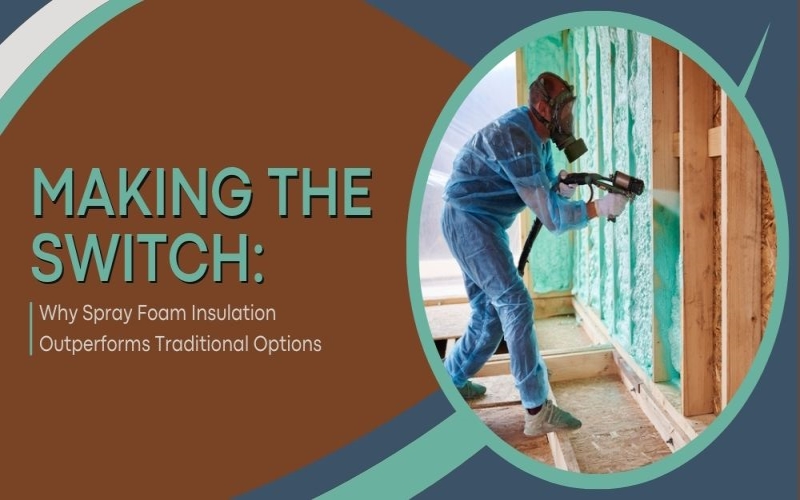
Ever felt like your home is just a fancy way of saying “expensive air leak”? If you’re nodding along, then you’re in the right place. As we strive for more sustainable living, the spotlight turns to the unsung hero of home efficiency – insulation. Gone are the days of the itchy pink stuff that looks like cotton candy but is far from tasty. Today, we’re diving into the world of spray foam vs. traditional insulation, and spoiler alert: it’s a game-changer.
If you’re considering upgrading your insulation to something more efficient, like spray foam, it’s important to first address the existing material. Old insulation removal is a crucial step to ensure that your new insulation performs at its best, free from any contaminants or moisture build-up that could compromise efficiency. Proper removal services help create a clean foundation for spray foam or any modern insulation solutions, enhancing overall energy savings.
Comparative Analysis: Spray Foam vs. Traditional Insulation Materials
When choosing insulation for your home or building, spray foam and traditional materials such as fiberglass are popular. Each has its unique characteristics that make it suitable for specific applications. These are the key differences to consider when comparing spray foam and fiberglass insulation:
Spray Foam Insulation:
- Provides superior air sealing and insulation properties
- It offers higher energy efficiency and can reduce heating and cooling costs
- It serves as a moisture barrier to stop the growth of mold and mildew.
- Requires professional installation due to the specialized application process
Fiberglass Insulation:
- More affordable than spray foam insulation
- Easier to install, making it a popular DIY option
- It may have lower energy efficiency compared to spray foam
- Requires proper sealing to prevent air leaks and maintain efficiency
Considering these factors and your project’s needs can help determine which insulation material is better.
Performance Metrics
Thermal resistance, air-sealing properties, and moisture barrier capabilities are essential metrics to consider when comparing insulation materials. These are the key points to keep in mind when evaluating them:
R-values:
- Reflect the insulation’s ability to resist heat flow.
- High R-values indicate more effective insulation.
- Fiberglass has a lower R-value per inch of thickness than spray foam.
Air Sealing Properties:
- Determine the material’s ability to prevent air leaks and infiltration
- Spray foam provides superior air sealing properties, while fiberglass needs additional sealing to minimize air leaks
Moisture Barrier Capabilities:
- Address the material’s ability to prevent moisture accumulation and mold growth.
- Spray foam acts as a moisture barrier, while fiberglass can retain moisture, leading to mold growth if not properly installed and sealed.
Installation Process and Results
The installation process is a crucial factor to consider when choosing between spray foam and traditional insulation materials. These materials differ in terms of their installation methods and requirements. The following points provide an overview of the installation process for each:
Spray Foam Insulation:
- Requires professional installation by certified contractors
- Involves spraying the foam using specialized equipment and techniques
- Requires proper ventilation during and after installation for safety
- It can be applied in hard-to-reach areas, creating a seamless barrier
Traditional Insulation:
- It can be installed by professionals or as a DIY project
- Involves cutting, fitting, and placing insulation batts or blankets
- Requires protective gear during installation due to fiberglass particles
- It may require additional sealing to minimize air leaks
What’s Their Environmental Impact?
When addressing the environmental impact of insulation materials, spray foam, and traditional insulation offer different advantages. While highlighting its lower ecological footprint, one should consider spray foam over traditional insulation.
The following are the key points to consider:
Spray foam insulation:
- It boasts a lower ecological footprint.
- It Provides greater longevity and efficiency.
- It offers a more environmentally friendly option compared to traditional insulation.
Traditional insulation:
- It plays a role in providing insulation solutions.
- It may have a higher ecological impact compared to spray foam.
- Could benefit from exploring more environmentally friendly options.
- Considering these factors allows for a comprehensive evaluation of the environmental impact when choosing between spray foam and traditional insulation.
The Future is Foam
In the grand scheme, choosing between spray foam vs. traditional insulation in Douglas County, KS, is like deciding whether to keep using your flip phone or upgrade to the latest smartphone. Both might get the job done, but one offers more bells and whistles.
Furthermore, for homeowners and builders ready to embrace the future of insulation, spray foam stands out as the savvy choice. With its superior performance, ease of installation, and friendlier environmental impact, spray foam isn’t just about saving on utility bills. It’s about investing in the comfort and sustainability of your home for years to come.
