

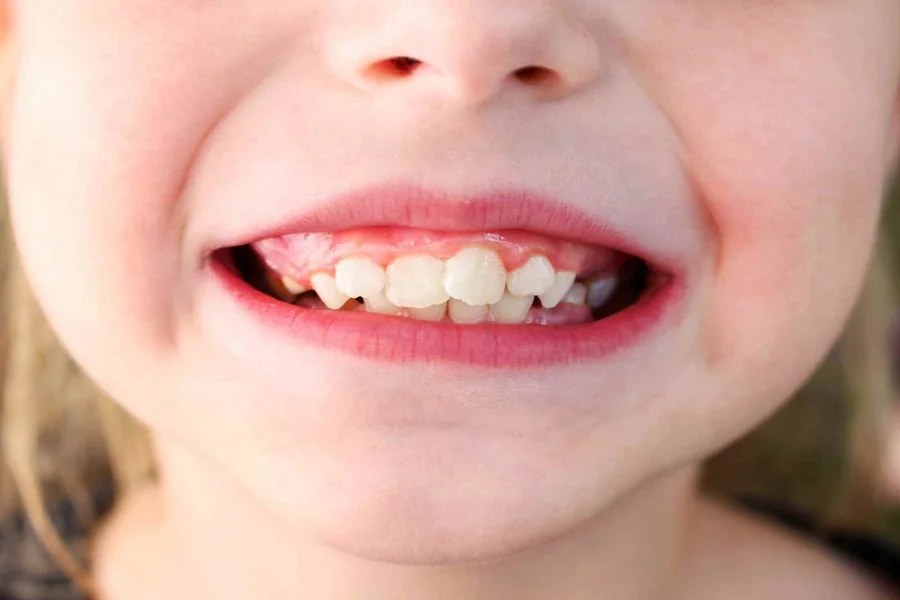
Buck teeth, also called overjet, are one of the most prevalent dental variables affecting people of all ages and backgrounds around the world. Knowing the causes of buck teeth and the available treatment options will be useful in determining the best choice for your oral health and confidence in your smile.
Defining Buck Teeth
Buck teeth develop when the upper front teeth extend outwards and typically beyond the lower teeth. You can also say there is substantial space between the upper and lower teeth in the front of the mouth which affects the facial structure in addition to the appearance of the teeth. Buck teeth fall under the category of general malocclusions which include different types of bite or tooth alignment irregularities.
The usual overjet is considered 2-3 millimetres, while buck teeth typically include an overjet of 4 millimetres or more. Cases of buck teeth can be severe, meaning an overjet of 8-10 millimetres or greater, which affects appearance and oral function. Buck teeth can affect one or several of the upper front teeth; normally, the upper central incisors protrude more than the rest of the teeth. Not everybody experiences buck teeth to the same degree. Some people only have a slight amount of protrusion, while for others, the protrusion may dramatically affect the overall facial profile of that person.
Primary Causes and Risk Factors
There are many causes of buck teeth. Family genetics plays a huge part, considering that jaw size and patterns of tooth placement are often inherited from parents.
Childhood habits are another common cause. Extended thumb sucking can push the upper teeth forward and affect the growth of the upper jaw. Extended pacifier use and tongue thrusting can create similar pressure. If an accidental injury occurred and knocked a tooth out, permanent teeth might not grow to their corrected position.
Premature loss of baby teeth due to decay may also cause a malocclusion, contributing to the development of a buck tooth where the new permanent teeth erupt in the wrong position, increasing the risk of developing overjet, or angled and protruding upper teeth.
Developmental Factors
When the upper jaw grows excessively or the lower jaw remains underdeveloped, the relationship between the upper and lower teeth becomes interrupted, resulting in overjet.
An additional reason that may impact buck teeth is mouth breathing. This might often be attributed to something chronic like allergies or chronic tonsil enlargement. Mouth breathing will have certain changes on facial development, which upon evaluation may add a component to buck teeth.
An injury to the jaw joint or supporting structures of teeth can also result in asymmetrical or abnormal developmental patterns and potential malocclusions.
Associated Complications
In addition to the primarily aesthetic issues associated with buck teeth, a number of functional and health issues may arise. The anterior teeth protrude and can be injured more readily during sports activities, accidents, or other simple activities.
There may be speech problems that arise with regard to sounds that require certain precision with the manipulation of the tongue to the teeth. Some with severe buck teeth have difficulties with properly pronouncing “s” sound combinations, such as consonants and vowels.
Eating and chewing efficiency may also suffer as a result of not having teeth in the proper alignment, which might result in patterns of excess wear on certain teeth and eventually on the temporomandibular joint.
Treatment Approaches
Today, orthodontic treatment offers a variety of options for correcting buck teeth. Conventional metal braces for buck teeth are still a safe and highly efficient way of correcting most cases, while invisible braces in Dubai, and other clear aligner systems provide aesthetic alternatives for eligible patients.
The timing of treatment can be significant in its effects and complexity; early intervention during childhood development often achieves more predictable results and may prevent the need for more extensive treatment later in life.
